Pints, Pals and Playback: The UK Listening Club Boom
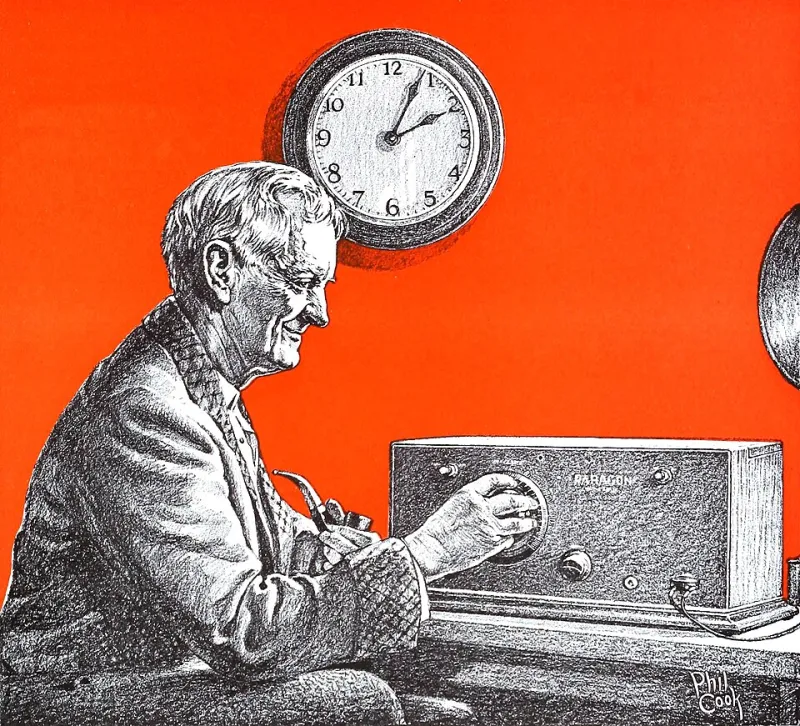
Photo: Phil Cook, Public domain, via Wikimedia Commons
A Tuesday night in Sheffield
The back room of a pub just off Division Street is full. Not packed, but full — maybe thirty people, pints and soft drinks, phones face down on the tables. A single speaker sits on a chair at the front. At 7:30, someone presses play. For the next 28 minutes, nobody talks. They laugh in the same places. They wince in the same places. When the episode ends, the room exhales, and the discussion begins.
This is a listening club. In 2026, they’re popping up in pubs, community halls, indie cinemas, libraries and church rooms across the UK. The format is simple: one episode, one room, one conversation. No screens. No scrolling. Just a group of people paying attention to the same thing at the same time.
It sounds almost old-fashioned. That’s exactly why it works.
Why shared listening is having a moment
Podcasting has spent a decade becoming personal. Headphones, commute, dishes, dog walk. That intimacy is the medium’s superpower. But intimacy can tip into isolation. A lot of people listen to shows about local politics, grief, football, food or class and then have nobody to talk to about them.
Listening clubs solve that. They’re cheaper than a cinema ticket. They don’t require you to have read a book. They give local venues a reason to open on a quiet night. And they turn a private habit into a public one without demanding that anyone perform.
There’s also a practical appeal for creators. A listening club is a live audience that isn’t a comedy gig. It’s a room full of people who already care about audio. For independent UK podcasters, that’s gold dust.
How an organiser programmes a night
The best clubs are ruthlessly simple. A typical run sheet:
- 7:00pm — doors. Drinks, name stickers, a bit of mingling. Keep the music low.
- 7:30pm — listening. One episode, usually 20 to 35 minutes. No phones. No preamble longer than two minutes.
- 8:00pm — break. Ten minutes to refill, stretch, jot down a thought.
- 8:10pm — discussion. A host asks three or four open questions. Nobody has to speak.
- 8:50pm — close. Announce the next episode. Thank the venue. Let people leave or stay.
Programming matters more than production. Pick an episode with a clear story and a bit of texture — something that will make people disagree politely. A 90-minute interview might be brilliant, but it will flatten a room. A 25-minute narrative episode gives everyone something to hold.
Mix it up across the year. One month a local history episode, the next a comedy pilot, then a documentary about housing. Invite the creator if they’re local. But don’t turn every night into a Q&A. The club is for the listeners first.
The setup: one speaker and a backup download
You do not need a PA system. You need a decent speaker, a cable and a plan B.
- Speaker: A portable Bluetooth speaker with a line-in socket is fine. Something from Anker, Sony or JBL in the £40–£100 range will fill a pub back room. Test it before doors.
- Source: A phone or tablet with the episode downloaded for offline playback. Do not rely on pub Wi-Fi. Ever.
- Backup: The same episode downloaded on a second device, plus a USB stick or laptop if you’re using a venue’s system. Redundancy is not paranoia. It’s manners.
- Cables: Aux cable, charging cable, adaptor. Label them.
- Host mic: Optional. A host with a clear voice can project. A cheap dynamic mic and a small amp can help in a big room, but don’t overcomplicate it.
- Accessibility: Ask the venue about step-free access and hearing loops. Share a transcript or episode notes afterwards where possible. Keep the listening volume comfortable. If someone needs to step out, let them.
Finding a venue that gets it
Pubs are the natural home. They have rooms, toilets, drinks and a built-in atmosphere. But not every pub wants thirty people sitting in silence on a Tuesday. Look for a back room away from the quiz, the football and the fruit machine. Ask about a minimum spend rather than a hire fee. Be honest about numbers.
Community halls, libraries and indie cinemas are often keener and cheaper. They may already have a speaker and a projector. They may also have stricter closing times. Check.
One organiser in Bristol runs her club in a co-working space after hours. Another in Glasgow uses a church hall with a kettle. The venue matters less than the quiet.
Starter kit for your first listening club
- Pick one episode. Not a theme, not a season. One episode, 20–35 minutes, with a strong story and a question at its heart.
- Find a room. Ask for a quiet back space, step-free access and a hour and a half. Offer to buy drinks.
- Test the audio. Do a full run-through in the room at the volume you’ll use. Sit at the back. Can you hear every word?
- Write a run sheet. Timings, host questions, house rules. Keep it to one page.
- Host, don’t lecture. Your job is to open the conversation, not to be the expert. Ask: What stayed with you? Where did you disagree? What did it get right about this place?
- Promote locally. Poster in the venue, local newsletter, Instagram, word of mouth. Tell people it’s fine to come alone.
- Collect emails, not followers. A simple sign-up sheet is more useful than a viral post.
- Make it monthly. Regular beats sporadic. Same night, same time, same room.
The bit nobody talks about: the silence
Shared listening feels strange at first. People are used to multitasking. Sitting in a room doing only one thing can feel exposing. But that’s the point. The silence isn’t empty. It’s collective attention. And when it breaks, the conversation is different from the one you’d have online. It’s slower. More nuanced. Less performative.
That’s why listening clubs are spreading. They’re not a marketing stunt for podcasts. They’re a social format in their own right — a book club for your ears, with better snacks and no homework guilt.
Start small. One episode. One room. One Tuesday. See who turns up.