Parish Notices, Nationally: How to Build a Hyperlocal Podcast That Travels
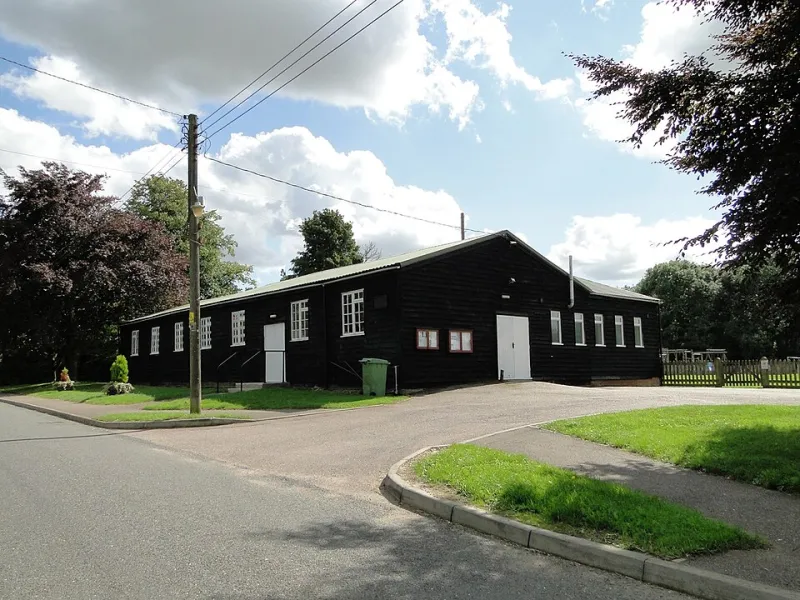
Photo: Adrian S Pye , CC BY-SA 2.0, via Wikimedia Commons
There's a particular sound to a podcast recorded in a village hall. A faint scrape of stacking chairs. A hum from the kitchen urn. Someone's coat zipping up mid-sentence. On paper it's everything a producer would strip out. In practice, in 2026, it's the reason people keep pressing play.
The hyperlocal podcast has quietly become one of the more interesting corners of UK audio. Not hyperlocal as a marketing word, but properly local: a show about one town, one high street, one stretch of coast, one parish. And the strange thing is that these shows aren't staying local. They're picking up listeners well beyond the boundary sign, because the specificity turns out to be the appeal.
If you make audio in the UK right now, there's a lot worth pinching from the format, even if your show has nothing to do with a parish council.
Why the community-scale show is landing now
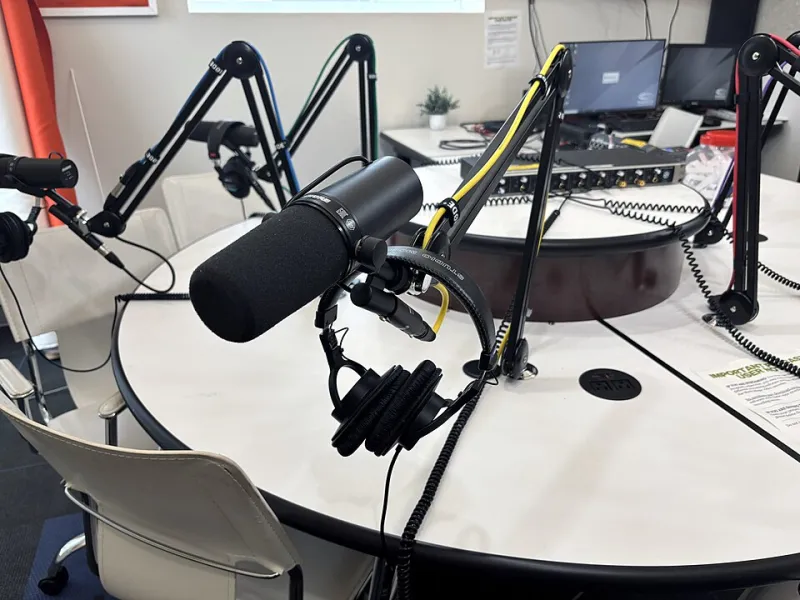
A few things have converged. The kit got cheap and quiet. A decent dynamic mic and a laptop can now hold their own in a room that would have been a nightmare a decade ago. Distribution stopped caring about postcodes. And audiences, worn out by shows that sound like they were built for an algorithm, have developed a real appetite for audio that sounds like it was made by a person who lives somewhere.
There's also the trust factor. A podcast about a specific place has to be accurate about that place, and listeners can tell instantly when it isn't. That pressure produces a kind of care you don't always hear in wider-topic shows. Ask anyone who has ever got a street name wrong in a community podcast. They will not do it twice.
The room is your co-host, not your enemy
Most of these shows are recorded in spaces that were never designed for it: libraries with high ceilings, community centres with laminate floors, church halls with enough reverb to drown a conversation.
Rather than fight it, treat the room as part of the sound. A few things that reliably work:
- Move the mic, not the room. Closer miking, around a hand's width, plus a tighter pattern, kills more reflection than any foam tile you'll tape to a wall.
- Break up the big surfaces. Coats on the back of chairs, a rug, a stack of chairs against a wall. It isn't studio treatment, but it takes the edge off a hard flutter echo.
- Record a minute of silence. Room tone is gold in the edit. It lets you patch gaps and smooth cuts without the join sounding like a dropped call.
- Keep a little of the life. Don't scrub everything. The kettle, the door, the distant school playground at 3pm. Those are texture, and they're why the show feels like somewhere.
What you do want to control is the boring stuff: consistent levels between guests, no mic bumps, and a clean first thirty seconds so a new listener isn't scared off before the story starts.
Small audience, unusually good detail
Hyperlocal shows survive on specifics. The name of the bus that doesn't run after six. The chip shop that changed hands. The bench that keeps getting moved. That level of granularity is normally the first thing cut in a wider show, because it needs explaining.
Here, it doesn't. The audience already knows. And that shared shorthand is precisely what makes it listenable to an outsider: it feels like eavesdropping on a place that genuinely exists.
Which leads to the important bit of craft. If you want a local show to travel, don't sand off the detail. Frame it instead. A short, natural line of context does the work: one clause telling a stranger why this matters, delivered in a way that doesn't patronise the locals. It's a fine balance, but it's the whole job.
The in-joke problem
Every community podcast develops a set of references that only fifteen people get. That's fine and often funny. The risk is building an entire episode out of them.
A workable test: if a listener from another city tuned in at a random point, would they understand what the stakes are within ninety seconds? If not, the show is drifting into a private club. Keep the jokes, but give them a doorway.
Running it without burning out
Most of these shows are made by one or two people around a day job. The ones that last tend to share a few habits:
- A fixed, modest cadence. Monthly beats fortnightly if fortnightly means three episodes and then silence.
- A bank of three or four evergreen episodes recorded in a quiet week, ready for the week when life gets in the way.
- Guests booked as a pair where possible, so one cancellation doesn't empty the diary.
- One shared folder with consent forms, sign-offs and running orders, so admin doesn't quietly take over the edit.
And be honest about the numbers. A show with two hundred regular listeners in a town of nine thousand is doing better than it looks. Local sponsorship, a library event, a slot at the community fair: those are real wins at this scale, and they don't require a national chart position.
What everyone else can borrow
You don't need a village hall to use any of this. The lessons transfer cleanly to any UK podcast:
- Give your show a place. Even a niche show can anchor itself geographically, and a sense of location makes abstract topics concrete.
- Keep one genuinely odd detail per episode. Specificity is memorable; generalisation isn't.
- Record where life happens. A kitchen table with a decent mic often beats a sterile room with a bad one.
- Write the doorway line. Every local reference needs one sentence that lets a stranger in.
There's a reason these shows are cutting through in 2026. They sound like something rather than anything. And in a feed full of audio that could have been made anywhere, sounding like somewhere is a genuine advantage.
So if you've been putting off recording in the hall because of the echo, go and record in the hall. Bring a rug, bring a spare mic stand, and bring the parish notices. The echo is part of the story.