The Fifteen-Second Shop Window: UK Podcasters Are Now Recording for the Scroll
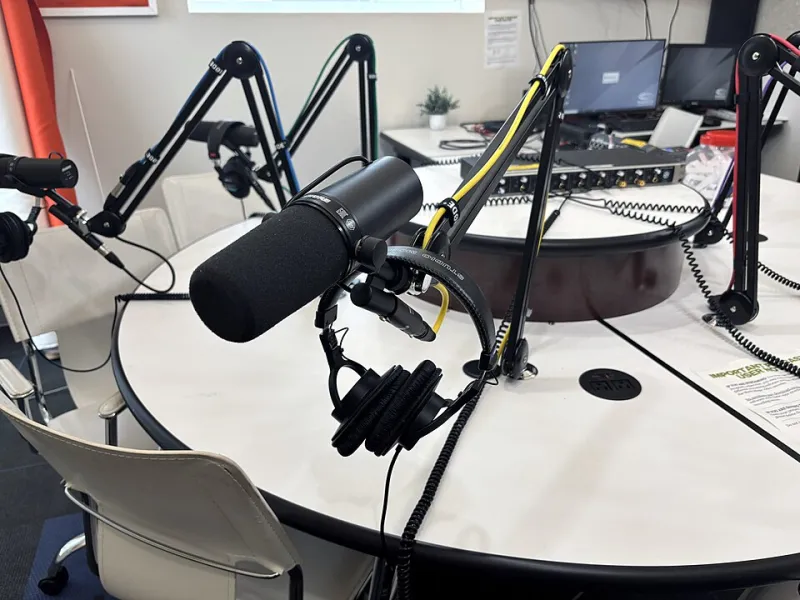
Photo: Myotus, CC BY 4.0, via Wikimedia Commons
Walk into any shared studio space in Manchester or Bristol right now and you'll see the same small adjustment. The camera is a bit higher. The two presenters are sitting closer together than they'd like. There's a strange amount of empty space above their heads, and a rectangle of tape on the desk marking where the phone goes.
That's a show being recorded for the crop. Not because the audio has become an afterthought, but because the clip has become the front door.
The clip is no longer the advert — it's the shop window
For years, the social clip was an afterthought: a nice bit of admin someone did on a Tuesday, if there was time. Now, for a lot of UK indie shows, it's the primary discovery channel. The main feed is where the loyal audience lives; the feed on the phone is where the next audience is found.
That shift has consequences upstream. If the moment that travels is the moment that earns you listeners, then the moment becomes something you plan for rather than hope for.
Producers are now describing episodes in terms of "handles" — the bits someone could grab hold of without context. A strong opinion, a genuinely daft tangent, a guest's unexpected confession. If a 45-minute episode has three of those, everyone's happy. If it has none, you've made a very nice piece of audio that nobody outside the existing subscriber base will ever hear.
Recording for the crop, not against it
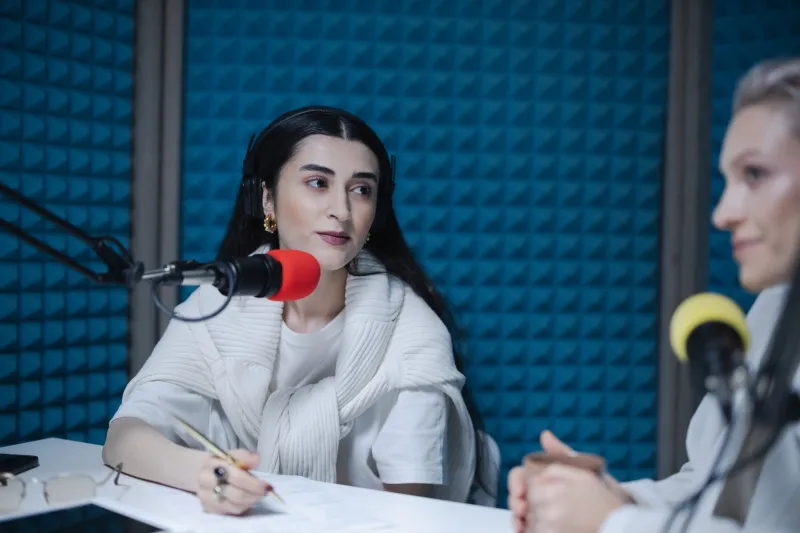
Vertical video changes the geometry of a room. Two presenters sat side by side at a desk become two faces squeezed into a narrow frame, which is why so many shows have moved to an angled set-up — a soft V shape, close enough that a single 9:16 crop can hold both faces without either one looking like a passport photo.
A few practical habits that have become standard:
- Frame for the narrowest crop first. Decide where the phone shot lives, then light and dress the wider shot around it.
- Keep the safe zones clear. On-screen captions will eat the bottom quarter of the frame, so don't put anything you need there. Or anyone's hands.
- Record locally, not just over the call. Double-enders and local capture have made a huge difference to how usable a clip looks when a connection wobbles.
- Give yourself sound to cut on. A laugh, a table thump, a pause — these are the seams an editor uses to make a vertical clip feel like it has an ending.
And please, leave some room tone. Clips that start with silence and end with silence cut together far better than clips that sound like they were assembled in a lift.
Mark the moment while it's happening
You can't remember timestamps. Nobody can. So make a mark at the time — a raised hand, a tap on the mic arm, a producer dropping a note in a shared doc with the words "the bit about the ferries". It takes half a second and saves twenty minutes of scrubbing.
Some teams go further and run a live log while recording, tracking the rough shape of each episode so they know by the end which two moments deserve a feed edit. That's a fifteen-minute job that makes the whole week's promotion easier, and it lets a show plan a clip cadence across several days rather than dumping everything on a Thursday night.
The risk: a podcast made entirely of peaks
Here's the counter-argument, and it's a good one. If every episode is built around three grabby moments, you slowly stop making episodes. You start making highlight reels with gaps in between — a kind of trailer-shaped show that sounds exciting and says nothing.
Long-form audio does something the clip can't: it lets a listener spend an hour in someone else's company. That's the reason people describe podcasts as companionship. It's also the thing that turns a casual listener into a supporter who buys the merch box or turns up to the live show.
So the goal isn't to hollow out the episode. It's to make sure the episode has a spine the clips can hang from. A good rule of thumb: the clip should be a door into the episode, not a summary of it. If you've heard the clip, you should want the room behind it — not feel like you've already been in there.
Practical advice that doesn't require a second job
Write one idea per episode, hard. Shows that try to cover five topics in forty minutes rarely produce a clip that stands alone. One clear argument, one story, one ridiculous premise: easier to cut, easier to sell.
Front-load the good stuff slightly. Not clickbait, just less throat-clearing. The first ninety seconds should tell a new listener what kind of show this is.
Cap your clips. Three to five per episode is plenty for most indie shows. Beyond that you're asking your audience to work, and the returns diminish fast.
Caption properly. Bespoke captions in your own typeface, checked by a human, do more for a show's identity than any filter. Autogenerated subtitles that mis-spell a place name will undo the goodwill.
Keep a clip library. Not just the ones you posted — the ones you didn't. They're useful for trailers, for the Patreon feed, for the live show ticket page.
And when the numbers show that a twelve-second tangent outperformed your carefully considered interview, resist the urge to rebuild the entire show around it. Let the clip do its job in the shop window. The episode still has to be worth walking into.