Passing the Mic: How UK Podcasts Survive a Change at the Front
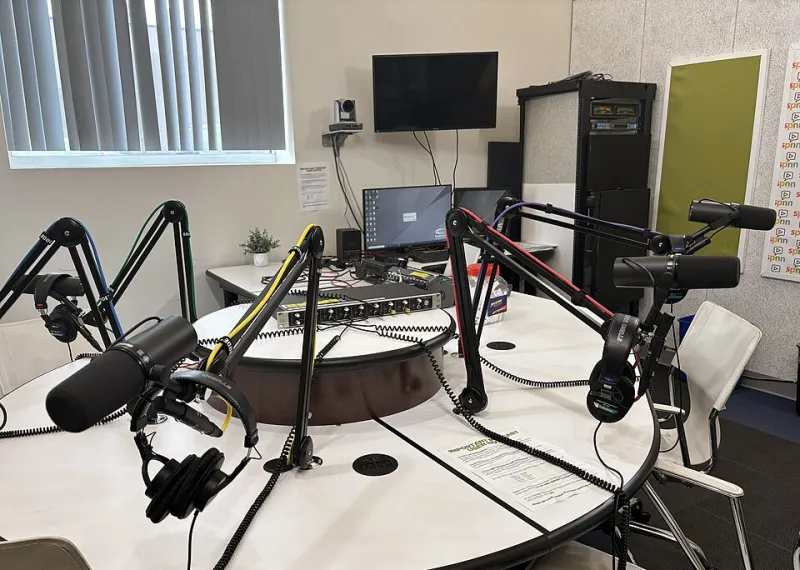
Photo: Myotus, CC BY 4.0, via Wikimedia Commons
There is a particular kind of email that lands in a podcast inbox around this time of year, usually from a producer, usually on a Friday, usually with the subject line "quick one". Our host is stepping back. We've got someone in mind. How do we do this without torching the audience? It's the most delicate job in audio and almost nobody talks about it in public.
We talk endlessly about the first 90 seconds of an episode, the cold open, the trailer that earns a follow. We rarely talk about the moment a show has to say, out loud, that the voice you've had in your ears for four years is going to be someone else's in March.
The Feed Doesn't Care. Listeners Do.
From a technical standpoint, a host handover is trivially easy. Same RSS feed, same artwork, same episode numbers, new file. Apple Podcasts and Spotify will not blink. The subscription graph will not even twitch.
The listener graph is another matter. Podcast loyalty is unusual in media because it's built on parasocial arithmetic: you let a stranger into the car, the kitchen, the dog walk, and over time their cadence becomes the wallpaper of your week. People don't unsubscribe because the SEO changed. They unsubscribe because the wallpaper is suddenly the wrong colour and nobody warned them.
So the practical question isn't "can we change the host" — of course you can. It's "how much of the show's texture can we preserve, and how honestly do we narrate the change?"
What Actually Makes People Bail
Two things, in our experience of watching UK shows do this well and badly.
The first is abruptness. If a listener presses play in the middle of a series and discovers a stranger mid-sentence with no explanation, the trust breaks instantly. It doesn't matter how good the new person is. They weren't invited, and the show didn't have the manners to introduce them.
The second is dishonesty. Listeners are extraordinarily tolerant of change and extraordinarily allergic to being managed. A chirpy show-notes line reading "exciting news — we've refreshed the format!" when the actual story is that a beloved presenter left under a cloud will read as corporate and slightly insulting. UK audiences in particular have a low tolerance for anything that sounds like a press release read aloud.
What people don't bail on: clarity. A host saying, in their own words, at the top of the episode, that they're off, why, when, and who's next. The podcast format is uniquely good at this, because you have unlimited minutes and a direct line to the ear. There is no reason to be coy.
Make the Handover an Episode, Not an Announcement
The shows that get this right treat the change as content rather than admin. That means a proper handover episode — ideally a conversation, not a monologue — where the outgoing host and incoming host talk to each other rather than about each other. It's a format that does the heavy lifting for you: it shows the new voice in dialogue, it demonstrates that the old one endorses them, and it gives the audience something to actually listen to instead of a notice to skim.
We've seen this work across formats from long-running interview shows to small independent shows that record in a spare room in Leeds. The common thread is that the outgoing host stays for a bridge of two or three episodes rather than vanishing after one. Co-presenting a couple of editions — even just the intro and the outro — gives the audience a runway. The new person is no longer an intruder; they're a colleague you've been introduced to.
Where shows get it wrong is the eulogy problem. Ambitious farewell episodes can tip into tribute, and a tribute is a very hard act to follow. If episode 200 is a two-hour love letter to the departing host, episode 201 is always going to feel like the first day at a new school. Keep the goodbye warm but short, and give the new host room to be normal quickly.
Keep the Furniture. Move the Photos.
There's a useful distinction from telly and radio that translates well to podcast production: some elements of a show are furniture and some are photographs. Furniture is the format, the running order, the jingle, the recurring bits, the way the show opens. Photographs are the host's specific stories, references and running jokes.
Furniture should stay. Keep the theme music. Keep the structure. Keep the segment names if they still work. That continuity is what tells the listener's brain that this is still the show they subscribed to, even though the voice has changed.
Photographs should move. Trying to make a new host inherit somebody else's running gags is the fastest way to make them sound like an impersonator. Let them bring their own references — their own corner of the country, their own obsession, their own daft segment idea. The show's identity should be shaped enough to survive a new voice, and loose enough to let that voice breathe.
One practical test: write the show's one-line description without using the host's name. If you can't, you've got a presenter with a podcast, not a podcast. That isn't necessarily bad — plenty of excellent UK shows are essentially one person's brain with a microphone — but it does mean the handover will be harder and needs more planning.
Say the Quiet Bit in the Show Notes
Notes are the place for the detail that doesn't fit in the audio. Dates. Whether back catalogue episodes stay up. Whether the departing host will pop back. Whether the format is shifting with the voice, because sometimes it needs to and pretending otherwise is a slow leak.
And update the artwork and the description on the same day the handover episode publishes, not three weeks later. It's a small thing, but half the confused one-star reviews under a new host's first episode are really reviews of a stale thumbnail.
The Brand Outlives the Voice
The uncomfortable truth is that a podcast brand is a promise about a feeling, not a person, and the shows that last are the ones willing to test that. Some handovers flop. A few thrive and the new host ends up more associated with the show than the founder. Most settle somewhere in between, with a small, permanent dip in the download numbers and a core audience that stays because it was told the truth early and treated like an adult.
If you're the producer with the Friday email in your inbox, the advice is boring but reliable: plan it as a series of episodes rather than a single announcement, keep the furniture, let the new voice bring their own photographs, and say the honest thing in the first 90 seconds. The feed will take care of itself.