The Pre-Loved Rig: How UK Podcasters Are Buying Used Gear Without Getting Burnt
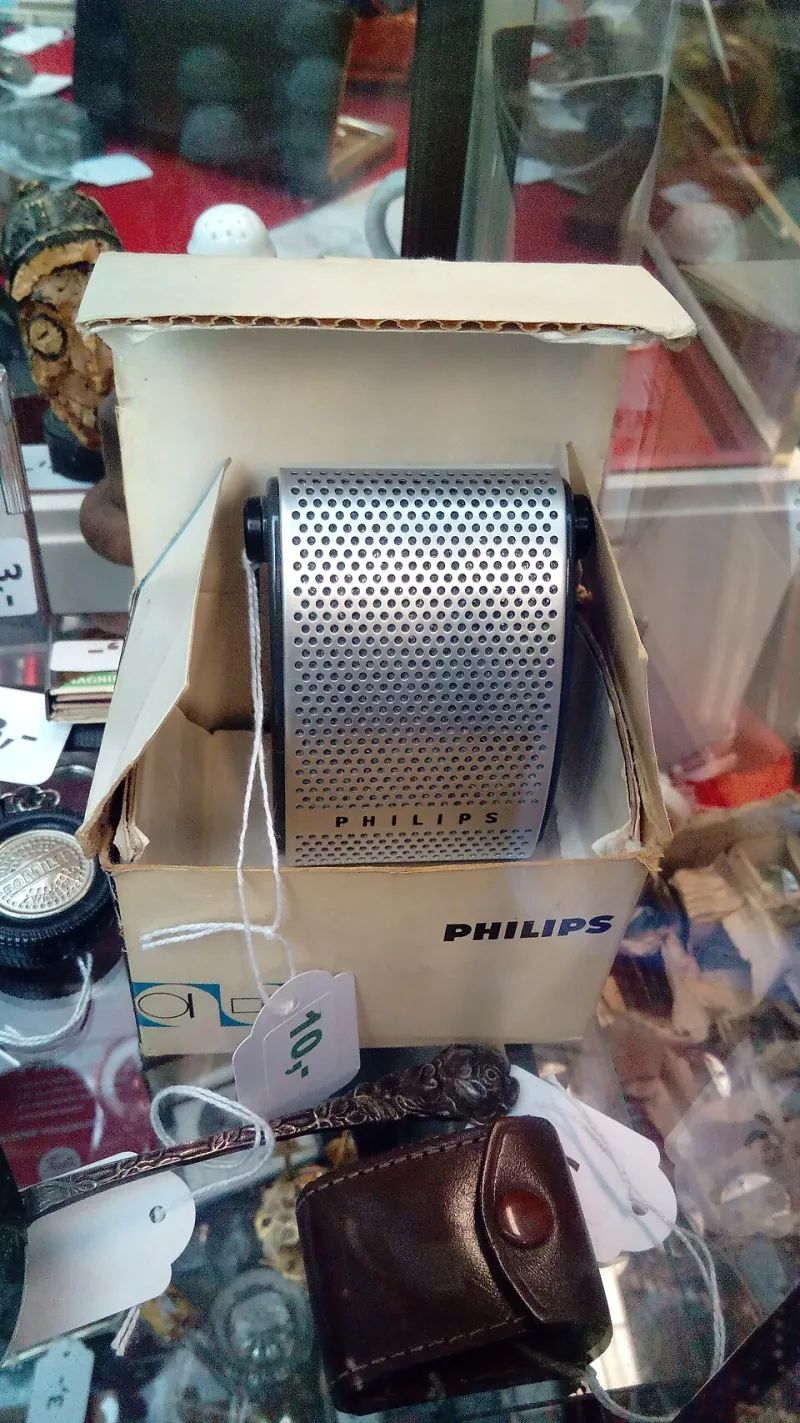
Photo: Donald Trung Quoc Don (Chữ Hán: 徵國單) - Wikimedia Commons - © CC BY-SA 4.0 International.(Want to use this image?)Original publication 📤: --Donald Trung 『徵國單』 (No Fake News 💬) (WikiProject Numismatics 💴) (Articles 📚) 01:08, 5 February 2021 (UTC), CC
There’s a particular smell to a British charity shop on a wet Saturday: damp coats, furniture polish and, increasingly, the faint whiff of old flight cases. Tucked between the paperback thrillers and the mismatched crockery, you’ll now find the occasional dynamic mic, a tangle of XLR cables, or a USB interface with a missing knob and a handwritten label reading ‘untested — £8’. For a growing number of UK podcasters, that shelf is not a joke. It’s the start of a rig.
The cost-of-living studio
A new Shure SM58 will set you back around £100. A Focusrite Scarlett 2i2 is typically £150 or more. Add a boom arm, a shock mount, cables, a pair of closed-back headphones and enough foam to stop your spare room sounding like a tiled bathroom, and the ‘proper’ starter rig can easily brush £400. That is a lot of money before you’ve recorded a single episode.
Second-hand changes the maths. A used SM58 in decent nick often goes for £50–£70. An older Scarlett Solo or 2i2 can be £60–£90. Boom arms, stands and cables are frequently £10–£20. For a hobbyist testing the water, or a long-running show tightening its belt, that difference is not small.
There’s a sustainability angle too, though it’s best not to over-egg it. Audio kit is dense with metals, plastics and electronics, and the embodied carbon of a microphone or interface is already spent the moment it leaves the factory. Keeping a working interface out of a drawer — or out of the WEEE recycling bin — is a quiet win. The Restart Project and the growing network of repair cafés have made that idea feel normal rather than worthy. Fixing a crackly cable or a sticky fader is now a Saturday morning activity, not a lost cause.
Where the kit actually turns up
The obvious places are the ones you’d expect: British Heart Foundation and Oxfam shops with an electronics shelf, car boot sales, Facebook Marketplace, Gumtree, eBay, Reverb, Cash Converters, and university surplus sales when a media department clears out its cupboards. Less obvious are the local podcast meetups and gear swaps where someone turns up with a rucksack of ‘spares’ and leaves with a different rucksack. These are small, word-of-mouth events, but they’re worth watching. A mic that has been used for three episodes of a true-crime show is often in better shape than one that has lived in a gig bag since 2014.
Charity shops are the wildcard. Staff often can’t test audio gear, so prices are low and descriptions are vague. That’s where a £6 ‘computer microphone’ can turn out to be a perfectly serviceable dynamic mic — or a plastic USB toy with a proprietary driver that never worked on anything after Windows 7. The lottery is part of the appeal, but only if you know how to play it.
What travels well, and what doesn’t
The safest second-hand buys are the boring ones: metal stands, boom arms, pop filters, shock mounts, XLR cables, headphone adapters and hard cases. These are simple mechanical objects. A stand either holds its position or it doesn’t. A cable either passes signal or it crackles when you wiggle the connector. Test, don’t trust.
Dynamic microphones are generally a good bet. They’re robust, there are plenty of them about, and the classic models are well understood. Check the grille for dents, the body for cracks, the XLR pins for corrosion and the on/off switch for crackle. A used SM58 with a scratched body is often a better investment than a suspiciously cheap new one from an online marketplace.
Interfaces are more of a gamble. The hardware can be fine, but the software and drivers are the real question. A ten-year-old USB interface might still work beautifully on your laptop — or it might be stuck on a driver that no longer supports your operating system. FireWire interfaces are best left alone unless you enjoy vintage computing. Very old USB mics with proprietary control panels are a similar trap. If it needs software that hasn’t been updated since before you had a smartphone, walk away.
Condenser microphones are the trickiest. Capsules can degrade, grilles can collect years of smoke and spit, and cheap models often have no spare parts. A second-hand condenser can be a bargain, but only if you can test it properly and you know what you’re looking at. For most home podcasters, a dynamic mic is the lower-risk route anyway.
The bench test you can do on a shop floor
If you can, bring headphones, a short XLR cable and a laptop or phone adapter. Ask the seller if you can test before you pay. Most will say yes, especially at a car boot or a gear swap. If they won’t, treat that as information.
For a microphone, talk close and listen for rattle, dropout or a thin, scratchy sound. Check the grille and capsule for dents and debris. Wiggle the XLR connector gently — if the signal cuts out, the socket needs work. For an interface, plug in headphones, raise the gain and listen for hiss, hum or crackle. Test every input, the phantom power switch, the headphone output and the gain knobs. Wobble the USB port. If the knobs feel gritty or the unit smells of smoke, factor that in.
For cables, plug in, wiggle both ends and listen. For headphones, check both ears and the cable entry point. For anything with a serial number, check it against the manufacturer’s photos. Counterfeit SM58s and SM7Bs are common, and the tells are usually weight, finish, packaging and a price that is simply too good. If a ‘new’ SM7B is £70 on Facebook Marketplace, it is not an SM7B.
The questions to ask before you hand over cash
Ask why they’re selling. Ask whether it’s been in a smoke-free, pet-free space. Ask if it’s been repaired. Ask for a receipt, even a handwritten one, and agree a short return window — 24 hours is enough to test it on your own machine. Meet in daylight, in a public place, and don’t transfer money before you’ve tested the kit. If you’re buying from a charity shop, ask whether they’ll hold it while you fetch a cable and headphones. Most will.
The foam question is worth its own paragraph. Second-hand acoustic foam can be fine, but check for shedding, smoke smell, damp and adhesive residue. Old foam can crumble into dust, and cheap foam can be a fire risk. If it’s been stuck to a wall with spray adhesive, it may come with more of the wall than you wanted. New foam is not expensive, and pop filters and windscreens are best bought new for hygiene reasons. Wipe down mic bodies and stands, replace headphone pads where possible, and don’t share a mic immediately after someone with a cold.
When new still wins
If podcasting is your main income, or you’re recording client work, a warranty and a returns policy are worth paying for. Refurbished and B-stock units from reputable dealers can split the difference: you get support and a guarantee without the full retail price. For your main microphone and interface, it’s often worth buying new or refurbished. For stands, cables, boom arms and cases, second-hand is almost always the smarter move.
At PodBox, we’re not here to tell you that pre-loved gear is a moral duty. It’s a skill, like learning to hear the difference between room reverb and a noisy preamp. Buy the boring stuff used, test the electronics properly, and don’t skimp on the thing you touch every day. The UK’s second-hand audio scene is not a compromise. It’s a different way into the hobby — and every scratched microphone has a story. Just make sure the story isn’t ‘it never worked’.