Six Episodes and Out: Why UK Podcasters Are Falling for the Boxed Set
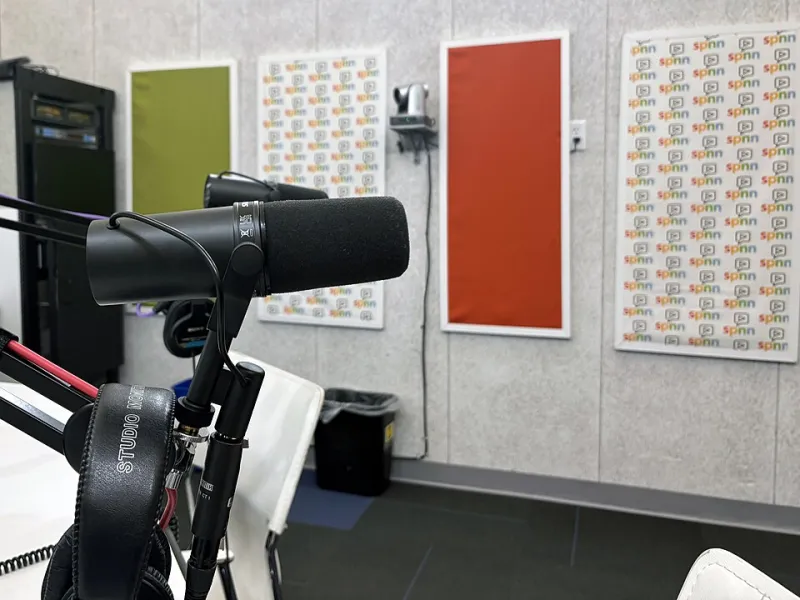
Photo: Myotus, CC BY 4.0, via Wikimedia Commons
There is a particular kind of guilt that comes with subscribing to a podcast and watching 84 unplayed episodes stack up like unread emails. You meant to start at the beginning. You still mean to. But the beginning is now three years ago, the host has changed co-hosts twice, and the show has done two rebrands and a live tour. In 2026, a growing number of UK podcasters are looking at that pile and deciding to make something smaller, neater and finite instead.
Enter the six-episode boxed set: a limited-run series with a clear start, a clear end and no expectation that you will still be listening in November. It is not a new idea — radio has been making short series for decades — but it is spreading through UK podcasting with a new urgency. Creators are packaging local history as six-part boxes, turning family recipes into food-and-memory mini-series, and building true-crime-style investigations that wrap up before the listener's commute changes season.
The endless season is getting a haircut
For years, the default podcast model was the weekly show that ran until the host got bored or the downloads dipped. That model still works for chat shows, news briefings and anything built on personality. But for narrative shows, the endless season has become a trap. Every new listener faces a back catalogue that feels like homework. Every promoter has to explain where to start. Every sponsor wants to know how many people actually finish.
A six-episode run solves a lot of that at once. It gives the listener a promise: this is a thing, not a treadmill. It gives the creator a deadline and a shape. And it gives the show a natural press hook — the boxed set can be reviewed, recommended and binge-listened as a single object rather than a drip-feed.
Why six? Because finishing is the new discovery
Six is a useful number because it is long enough to build a world and short enough to fit into a fortnight of dog walks. In completion terms, that matters. A listener who starts episode one of a six-part series can realistically reach the end. A listener who starts episode one of a 60-part series is making a lifestyle commitment.
UK listening habits have shifted towards this. Commutes are shorter for many people, gym sessions are fixed, and the school run has a hard stop. A boxed set fits into the gaps. It also suits the way recommendations travel: someone can say 'listen to this, it's six episodes' without adding a caveat about where to begin. That is a much easier message to pass around a group chat.
The boxed set is easier to sell — and to schedule
A limited series is a product. That sounds unromantic, but it is useful. You can launch it with a trailer, run it across six weeks, and close it with a finale that gives everyone something to talk about. You can pitch it to a local newsletter, a community radio station or a niche magazine as a complete package. You can approach a sponsor for a six-episode partnership rather than an open-ended commitment.
It also makes production saner. Recording six episodes in two blocks is often easier than trying to book guests every week for a year. Editing can be planned. Music can be cleared once. Artwork can be designed around a single series rather than a rolling identity. For small UK teams — often one person with a mic and a full-time job — that structure is the difference between a show that exists and a show that quietly stops in March.
The six-episode blueprint
If you are planning a boxed set, treat the six episodes as one story with six chapters, not six separate shows. Here is a practical way to structure it.
- One question, six answers. Write the central question in a single sentence. Each episode should answer a different part of it. If you cannot fit an episode into that sentence, it is probably a different series.
- Cast the arc before the mic. Know who appears in which episode and why. A six-part series does not need a huge cast, but it does need a reason for each voice to return or disappear.
- End each episode on a door, not a cliffhanger. You want the listener to want the next one, but you do not want to cheat them. A good ending opens a new thought rather than withholding the obvious one.
- Record in blocks. Book two or three recording days rather than six scattered ones. You will get a more consistent sound and a more consistent tone.
- Write the finale first. Knowing how episode six lands makes episode one easier to shape. It also stops you from writing yourself into a corner by episode four.
- Make episode one a standalone. New listeners often start there. It should explain the series, introduce the voices and still work if someone never presses play on episode two.
What you give up — and why it is worth it
The obvious loss is habit. A weekly show can become part of someone's routine in a way that a six-week run cannot. But the boxed set replaces routine with resolution. Listeners remember finished things. They recommend finished things. They return for the next boxed set if the first one respected their time.
In 2026, the UK podcast market is crowded enough that respect is a selling point. Six episodes and out is not a retreat from ambition. It is a way of making ambition legible. Wrap it up, put a bow on it and let the next box begin.