Behind the Till: How UK Podcasters Are Turning the High Street into a Listening Room
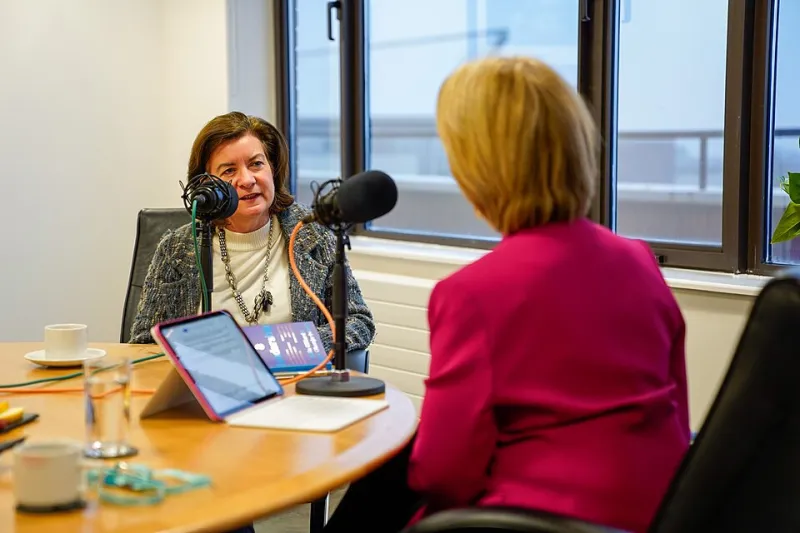
Photo: Welsh Government, OGL 3, via Wikimedia Commons
A podcast studio used to mean foam panels, a condenser mic and a sign on the door asking people not to breathe too loudly. In 2026 it can mean a folding table in the back of a greengrocer's, a stool beside a barber's chair or a corner of a community centre where the kettle is always on. The result is a growing wave of hyperlocal UK podcasts that treat the high street as a recording space rather than a backdrop.
These shows are not glossy. They are often recorded on a single dynamic mic, edited on a laptop and published with artwork made in a free design app. But they have something bigger productions often lack: a built-in audience of people who recognise the street, the shop and the voice behind the counter. Hyperlocal podcasting is quietly becoming the UK's new community radio — more intimate than a local station, more permanent than a social media post and surprisingly good at attracting local sponsors.
The shop floor as a studio
Picture a greengrocer's in Leeds on a Tuesday morning. The chiller hums, the radio is playing something from the 1980s and the owner is explaining how the market has changed since the 1990s. The podcast host is not in a studio; they are leaning on a crate of onions. That hum is not a problem to be eliminated. It is the texture of the place.
The same scene plays out in barbers, hardware shops, cafés and market stalls across the UK. A Bristol barber pauses the clippers to talk about the customers he has known for 20 years. A community centre in Sheffield hosts a roundtable about a housing estate that is being redeveloped. A stallholder in a Welsh market town describes the exact route his van takes at 4am. These are not interviews about 'the high street' in the abstract. They are conversations about a specific postcode, recorded in that postcode.
Why the corner shop beats the conference room
There are practical reasons hyperlocal podcasts work. Shops are full of people who are used to talking to strangers. They are busy, but they are also local, and a podcast is often a welcome bit of attention. Community centres already have rooms, tables and a mailing list of people who care about the area. Market stalls come with built-in footfall and a natural soundtrack.
More importantly, these places create trust. A listener in the same town hears a voice they recognise and feels a connection that a national interview cannot manufacture. The show becomes a way of keeping up with the street: who has moved in, who is retiring, what the council is doing to the bus route. It is community radio without the transmitter, available on demand and shareable in the local Facebook group.
Local sponsors notice this. A bakery, a hardware shop or a community centre can sponsor a six-episode run for a modest sum and reach exactly the people who walk past their door. The host-read ad feels less like advertising and more like a neighbour mentioning a good deal. That is a strong proposition in a small town and a useful one in a big city neighbourhood.
Booking contributors without being a nuisance
The first rule of recording in a shop is simple: do not turn up with a microphone and a clipboard like you are conducting an inspection. Visit first as a customer. Buy something. Explain who you are and what the podcast is. Leave a card. Come back when they suggest, not when you need them.
When you do book, be specific about the ask. 'Can I record 20 minutes about what the market was like in the 1990s?' is easier to say yes to than 'Can I interview you about local history?' Offer a couple of time slots, including one outside peak trading. Send a one-page brief with the questions and a link to a previous episode. Confirm whether they are happy to be named and whether they want to approve their quotes. Consent is not a formality; it is the foundation of a good relationship.
Community centres are useful neutral venues when a shop is too busy. They often have a quieter room, a kettle and someone who knows exactly who to introduce you to. Treat the space with respect, thank the staff on air and make sure the podcast links back to the centre's own work.
Getting usable sound in a busy space
A busy shop will win every time. The trick is to work with it rather than fight it. Use a dynamic microphone rather than a sensitive condenser. Get close — a hand's width from the mouth — and use a windshield if you are near a door. Record a minute of room tone so you have something to blend under edits.
Ask if the radio can go off, but do not demand silence. A fridge hum is part of the scene; a competing pop station is not. Record early in the morning or just after lunch if you can. Use a lapel mic if the contributor is moving around, and always monitor with headphones so you can hear the clatter before it reaches the edit. Keep levels conservative and back up the card before you leave the building.
If a kettle boils, keep it. If a customer walks in, pause and start again. Natural sound is an asset as long as it does not cover the words. The goal is not a pristine studio recording; it is a recording that feels like the place without making the listener work to hear it.
Editing for people who do not live there
Hyperlocal shows have a tension to manage: the core audience knows the street, but the podcast still needs to make sense to a national listener who found it through a recommendation. The fix is context, not compromise. Keep the local names and references, but add a sentence of explanation the first time they appear. 'The old Co-op on Mill Road' becomes 'the old Co-op on Mill Road, which closed in 2019 and is now a nail bar'.
Cut dead air and repeated introductions. Keep episodes to a comfortable 20 to 30 minutes unless the story demands more. Use natural sound sparingly — a few seconds of shop ambience at the top, a till ring or a market call between chapters. Write an intro that situates the listener in the place without turning into a geography lesson. The aim is a doorway, not a map.
The local sponsor sweet spot
Hyperlocal podcasts are well suited to host-read sponsorship from independent businesses. Sell a series rather than a single episode. Offer a simple package: a 30-second read at the top and a mention in the show notes, with a discount code if the sponsor wants one. Keep the number of sponsors low so the show does not sound like a market tannoy.
Approach businesses that already know the contributors. A bakery that supplies the café, a hardware shop that sponsors the football team, a community centre that wants to promote its own events. Be clear about the audience size and be honest about what a small show can deliver. Local sponsors often value goodwill as much as download numbers, and a well-made hyperlocal series can build plenty of both.
The corner shop tapes are not a nostalgia project. They are a practical way of making audio that belongs somewhere. In 2026, that sense of belonging is exactly what UK listeners are looking for — and it sounds best with the chiller humming in the background.