Foley With a Fiver: How UK Audio Dramas Get Made on Pocket Money
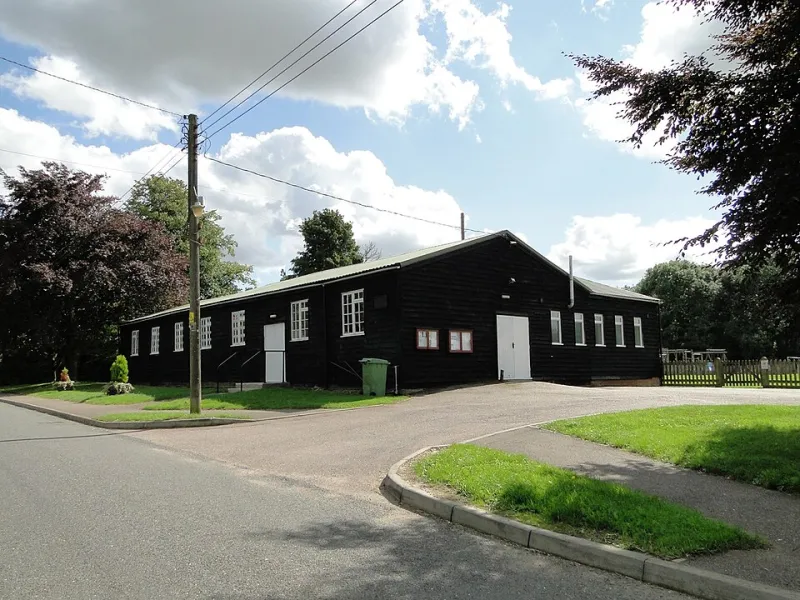
Photo: Superbrad6, CC BY-SA 4.0, via Wikimedia Commons
There's a sound that gives away a micro-budget audio drama, and it isn't a bad one. It's a duvet. Not the rustle — the slightly dead, slightly padded quality of a room that has been pressed into service as a vocal booth using whatever soft furnishings were within reach. You can almost hear the wardrobe door being closed.
Over the past couple of years, a quiet boom has been building in UK audio fiction: full-cast, multi-part dramas made by people with no studio, no label and, frequently, no budget to speak of. Some are folk horror set on a flat Norfolk horizon. Others are workplace comedies recorded in a Salford basement, or ghost stories that never leave zone four. What ties them together is a particular kind of resourcefulness — and a set of production decisions that are worth studying whether you're making drama or not.
What a tenner actually buys
Let's be honest about the maths. A twelve-quid episode doesn't exist in any literal sense; it's shorthand for a show where the cash outlay per instalment is roughly the price of two pints and a bag of props from a charity shop. The rest is borrowed: rooms, gear, time, favours, goodwill.
That's not a scandal. It's a model, and it has a long lineage in this country — the amateur dramatic society, the hospital radio station, the student revue. Audio just happens to be the cheapest place to put on a show. You need one decent microphone rather than forty, and the set can be a coat rack.
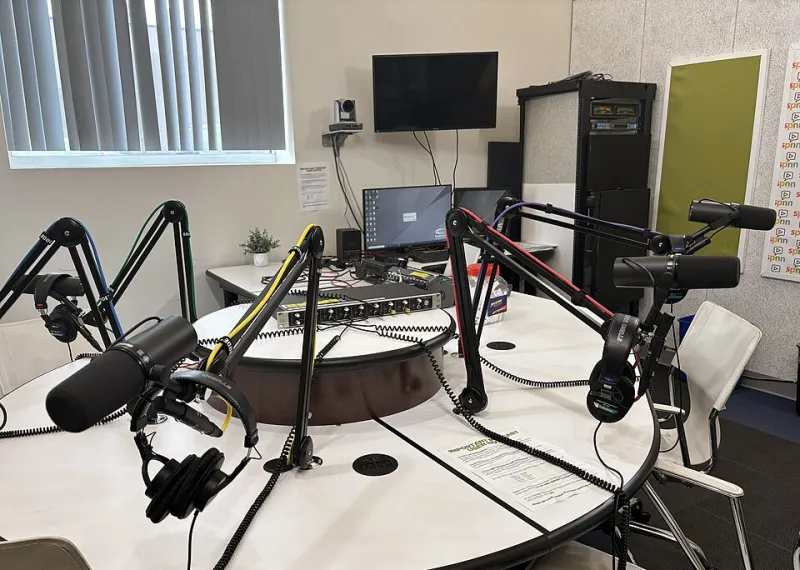
What the money genuinely goes on, in most of these productions, is props, transport, and a token fee or a takeaway for the cast. Microphones are borrowed, or bought once and used for years. The DAW is usually Reaper, Audacity or Ardour. Nobody is hiring a studio at hourly rates unless somebody's cousin happens to run one.
The props drawer is the cast
Good audio drama lives or dies on the small sounds, and the small sounds are cheap. This is where the scene is at its most inventive and most charming.
The classic tricks still work: a stick of celery snapped close to the mic for a bone break, cornflour shaken inside a leather glove for footsteps in snow, a cabbage for a punch that lands. Hooves can be a broom handle and a pair of maracas, or half coconuts if you're feeling traditional. A bicycle lock, a set of keys, a biro clicked repeatedly — the entire sonic furniture of a British kitchen can be repurposed into a spaceship, a hospital corridor or a collapsing pier.
What's changed is that people now share these techniques openly. A generation of makers has grown up watching foley artists break down their craft on video, and the result is that a first-time producer in Dundee has access to the same bag of tricks as a Radio 4 studio. The gap between amateur and professional is narrower than it has ever been at the level of sheer invention.
Free sound, but read the small print
Here's where micro-budgets most often come unstuck, and it isn't the mic. It's licensing.
There are excellent free sound libraries — Freesound, Zapsplat, Pixabay and others — but the terms vary wildly. Some require attribution, some forbid commercial use entirely, and a distressing number of producers discover this only after their show has been monetised, crowdfunded or picked up by a platform. The BBC's sound effects archive is a magnificent resource with a licence that does not stretch to commercial podcasting, which surprises people every single week.
Music is the bigger trap. A track that sounds 'free' because it's on a random website is very often not. The safe approach is dull and effective: keep a spreadsheet, note the licence and the source for every single file, and assume you'll need to prove it one day. It takes an hour and it will save you a genuinely miserable afternoon.
The room problem
You can fix a lot in the mix. What you can't easily fix is inconsistency — the moment a listener can hear that episode three was recorded somewhere else.
This is the defining technical challenge of the borrowed-space model. A village hall with a high ceiling gives you a lovely natural reverb and a ticking clock you'll be removing for hours. A carpeted library meeting room is dead and forgiving, but you'll need to book it again for pickups. A pub function room is fine until the kitchen extractor fan starts up at half six.
Practical workarounds: record a minute of room tone in every space, every session, and keep it filed by location. Try to keep each character's scenes in the same room across the run where you can. And if the cast has to record remotely, keep the same microphone and the same corner of the same room for the whole series, because consistency beats quality every time.
Casting from the parish newsletter
The other quiet advantage of UK audio fiction is the depth of local performing talent. Amateur dramatic societies, university drama departments, community choirs, stand-ups doing their first paid gig — all of them contain people who can act and who will turn up on a Tuesday evening for expenses and a curry.
The etiquette here matters. If a show is making money, even modestly, the cast should see some of it. If it isn't, say so early and be explicit about what you can offer — a credit, a copy, travel costs, a reference. People are generous with their time, but not indefinitely, and the scene's reputation depends on treating that generosity properly.
Where the seams show
It would be dishonest to pretend micro-budget audio drama has no weak points. Three show up again and again.
- Loudness drift. Episodes mixed weeks apart on different sets of ears end up at wildly different volumes. Pick a target, stick to it, and check your series as a whole rather than one episode at a time.
- Unbalanced casts. A confident stage actor six inches from the mic and a nervous newcomer across the room will not sound like they're in the same scene, no matter how much compression you apply.
- Missing transcripts. Accessibility isn't a luxury item. A plain-text transcript costs nothing but time and opens the show to deaf and hard-of-hearing listeners, plus anyone reading on a noisy train.
Corners worth cutting, corners that cost you
Safe to trim: bespoke cover art commissions (a clean template goes a long way), premium plugins, paid hosting tiers, studio hire, and anything that promises to 'master' a full-cast drama automatically.
Not safe to trim: script editing, the final mix, transcripts, and paying people something. Those four are what separate a charming homemade drama from one that's simply homemade.
The bottom line
The best of this wave doesn't succeed because it's cheap. It succeeds because constraint forces invention — a single location, a small cast, a sound designer who has learned exactly what a bicycle lock can do. Polish is available to anyone with a credit card. Character isn't.
If you're sitting on a script and a microphone and a duvet, the honest answer is that you have enough to start.