Moored and Mic'd: What Britain’s Narrowboat Podcasters Know About Recording Anywhere
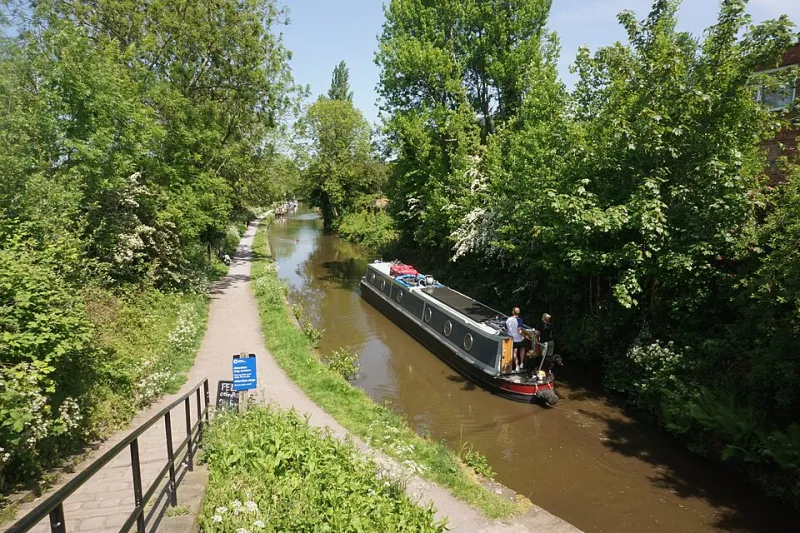
Photo: Bill Boaden , CC BY-SA 2.0, via Wikimedia Commons
Anyone who has tried to record a podcast in a shared house knows the room is never just a room. It is the boiler that clicks on halfway through a sentence, the neighbour’s dog, the fridge hum you swear you can hear on playback. On a narrowboat, that truth gets magnified. The room moves. The water slaps the hull. The wind finds every gap in a only-just-closed window. And yet, up and down the UK’s canal network, a small but growing band of podcasters is making some of the most inventive audio around from exactly these conditions.
This is not a story about glossy studios. It is about people recording in six-foot-wide spaces with a leisure battery, a dynamic mic and a healthy sense of humour. For anyone who makes podcasts in a kitchen, a cupboard or a corner of a living room, the floating studio has plenty to teach.
The studio that rocks, gently
Power is the first puzzle. A narrowboat is not a plug socket with a hull attached. Many creators run their recording gear from a leisure battery and an inverter, which means every piece of kit has a draw. The practical rule is simple: keep the chain short and the load light. A battery-powered recorder, a dynamic microphone and a pair of closed-back headphones will get you further than a desk full of gear that needs mains power. If you are using an inverter, check its rating before you plug in a laptop, an audio interface and a lamp. And try not to record while the engine is running unless you want a diesel drone as your co-host.
There is a useful lesson here for land-based podcasters too. Most home setups do not need half the equipment we think they do. A decent dynamic mic, a quiet recorder and sensible levels will beat a complicated rig that introduces a new hum every time you add a cable. On a boat, that discipline is not a preference. It is survival.
Wind, water and the neighbour’s generator
Outdoor recording on the cut is a negotiation with the elements. Wind is the obvious enemy. A foam windshield is better than nothing; a proper deadcat or blimp is better still. But the bigger fix is microphone choice and placement. A dynamic mic used close to the mouth rejects more of the world around it than a sensitive condenser pointed at the horizon. If you are interviewing a guest at a lockside bench, get close, angle the mic away from the prevailing wind and accept that some takes will be unusable.
Water noise is trickier because it is not always unpleasant. The slap of water against a hull, the clank of a lock gate, the distant chug of a diesel engine: these are the sounds that make canal-life shows feel alive. The mistake is trying to erase them completely. Record a minute of room tone wherever you are, then use it to smooth edits. If a lock gate interrupts the middle of a good answer, you can often keep the answer and bridge the gap with a little natural atmosphere. The goal is not silence. It is control.
For indoor recordings, soft furnishings are your friend. A narrowboat interior is full of hard surfaces, but it also has curtains, cushions, mattresses and bedding. Sit near the softest wall, put a duvet behind the mic if you can, and avoid recording in the middle of a bare cabin. If the ceiling is low, so much the better: a low ceiling can help keep reflections close and manageable. Just do not lean back into a corner and expect the audio to behave.
A tiny room with big opinions
Space changes how people speak. In a narrowboat, guests sit close together. There is nowhere to hide behind a broad desk. That can be awkward for the first five minutes and brilliant afterwards. People interrupt more naturally, laugh more easily and drop the interview voice. If you are recording in a small room anywhere, lean into that. Put the mic slightly off-axis so you are not breathing straight into it. Use headphones so you can hear the room as it really is. And keep the guest’s glass of water away from the table edge, because a spill on a boat is a different kind of production emergency.
The best floating podcasts do not pretend the boat is a studio. They let the space be part of the show. A guest arrives with a wet coat. A dog walks across the floor. Someone outside asks if you are moving after the next lock. These moments are not interruptions to be edited out. They are the texture that makes the episode feel like a place.
Guests at the lockside
The canal is a social network with a towpath. Podcasters find guests at lockside pubs, marina cafes, boatyards and volunteer work parties. The etiquette is straightforward: ask first, explain what you are making, and do not record anyone who has not clearly agreed. A small portable setup helps. A phone can work in a pinch, but a dedicated recorder and a handheld dynamic mic will give you something that sounds intentional rather than accidental.
Lockside pubs are tempting for a reason. They are warm, noisy and full of people with opinions about water levels. But a pub is also a room full of clatter, music and unexpected announcements. If you record there, sit away from the speakers, keep the mic close and record a separate room tone. Do not promise a clean interview if the landlord is about to ring the bell for last orders.
Why the floating audience is loyal
Canal-life podcasts attract a loyal listenership because they offer something the algorithm rarely does: routine. The canal changes slowly. The same stretch of water looks different in February and July. Listeners follow a boat’s journey the way they might follow a long-running radio drama. They learn the names of locks, pubs and bridges. They start to recognise the sound of a particular engine.
That loyalty is not built on production polish alone. It comes from consistency and place. A weekly show recorded on the same boat, with the same theme music and the same willingness to describe the weather, gives people a small anchor in their week. It is the audio equivalent of a walk along the towpath: not urgent, not flashy, but quietly restorative.
Three formats worth seeking out
If you want to explore the scene, look for shows that treat the cut as a character rather than a backdrop. The first format is the roaming interview: a host who records conversations with boaters, lock keepers and passers-by as they travel. The second is the slow diary: a weekly account of life aboard, complete with maintenance disasters and marina gossip. The third is the heritage show: canal history, engineering and the old working boats, told by people who know the difference between a lock and a weir.
The names change, the feeds come and go, and some of the best episodes are recorded on a phone in a pub garden. That is part of the charm. The canal podcast scene is small enough to feel discoverable and generous enough to welcome newcomers.
What to steal for your own show
You do not need a narrowboat to use these lessons. Keep your rig simple. Record in the softest corner you have. Accept that some noise is part of the place. Get the mic close. Record room tone. Let the room be in the show, but do not let it run the show. And if your recording space rocks gently from time to time, congratulations: you have found the most memorable studio in Britain.